.png)
Harry St. John Dix (1907 - 1968)
Updated: Jul 14, 2025

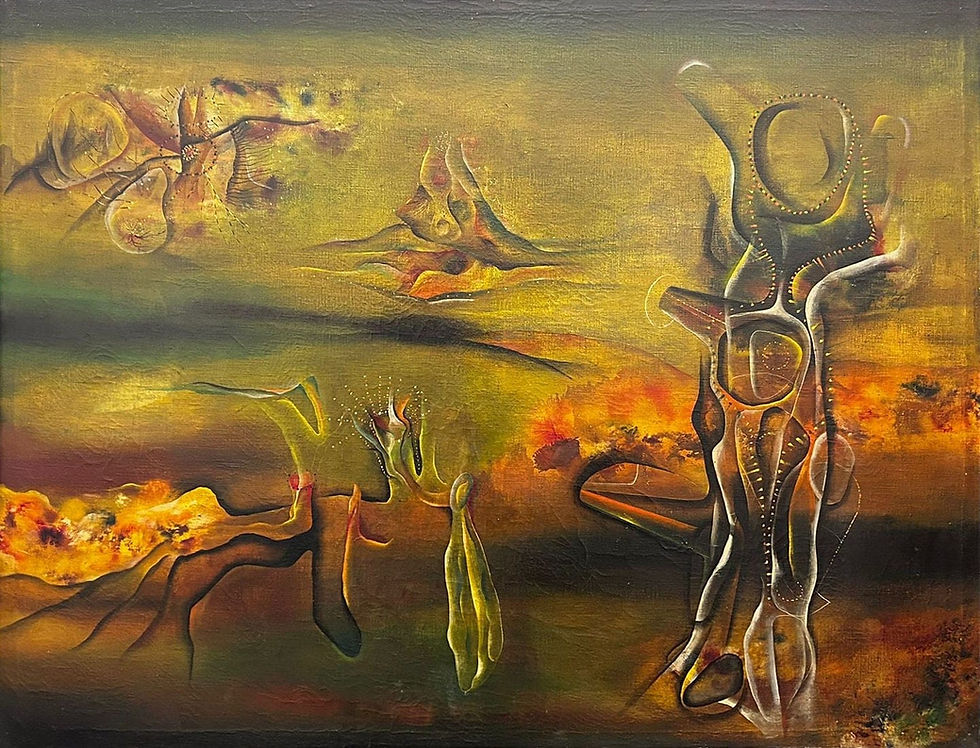
Downtown New York, c. 1930s, oil on canvas, signed lower right, 10 x 12 inches; label verso reads: "Harry Dix / Title Downtown New York / Medium Oil"
$2,500
Harry Dix was a 20th-century painter best known for his depictions of the American Scene. He was equally comfortable depicting urban and rural environments and his style alternated between tightly controlled compositions influenced by Precisionist and Magic Realist aesthetics and more painterly and expressive depictions of everyday life, such as the Downtown New York.
Dix was born in Seattle, Washington, and studied at Eaton College in England and the Art Students League in New York. He exhibited regularly during the 1930s and 1940s, particularly in the New York area. He participated in group shows at significant institutions, including the Whitney Museum of American Art, the Pennsylvania Academy of the Fine Arts, the Corcoran Gallery, and the Art Institute of Chicago. He also exhibited at the 1939 New York World's Fair and the Society of Independent Artists. During the Great Depression, Dix was involved with the Works Progress Administration (WPA), producing paintings and murals under the Federal Art Project. Some of his most notable works from this period emphasize the dignity of everyday life and the changing American economy, featuring rail yards, grain elevators, and small-town main streets. In 1941, his painting San Francisco Gothic won second prize from among over 4,800 entries at the Carnegie Institute's prestigious exhibition Directions in American Painting. The same year, one of his watercolors won first prize at the Springfield Art Museum. During World War II, Dix served in the US armed forces, including as a combat artist in the European Theater.
Dix’s work can be found in the collections of the Smithsonian American Art Museum, the Newark Museum of Art, and the Detroit Institute of Arts. Several regional museums, including the Butler Institute of American Art and the New Britain Museum of American Art, also hold examples of his paintings. Dix is listed in Who Was Who in American Art and all other standard references.


Comments